Written by Doug Cronin
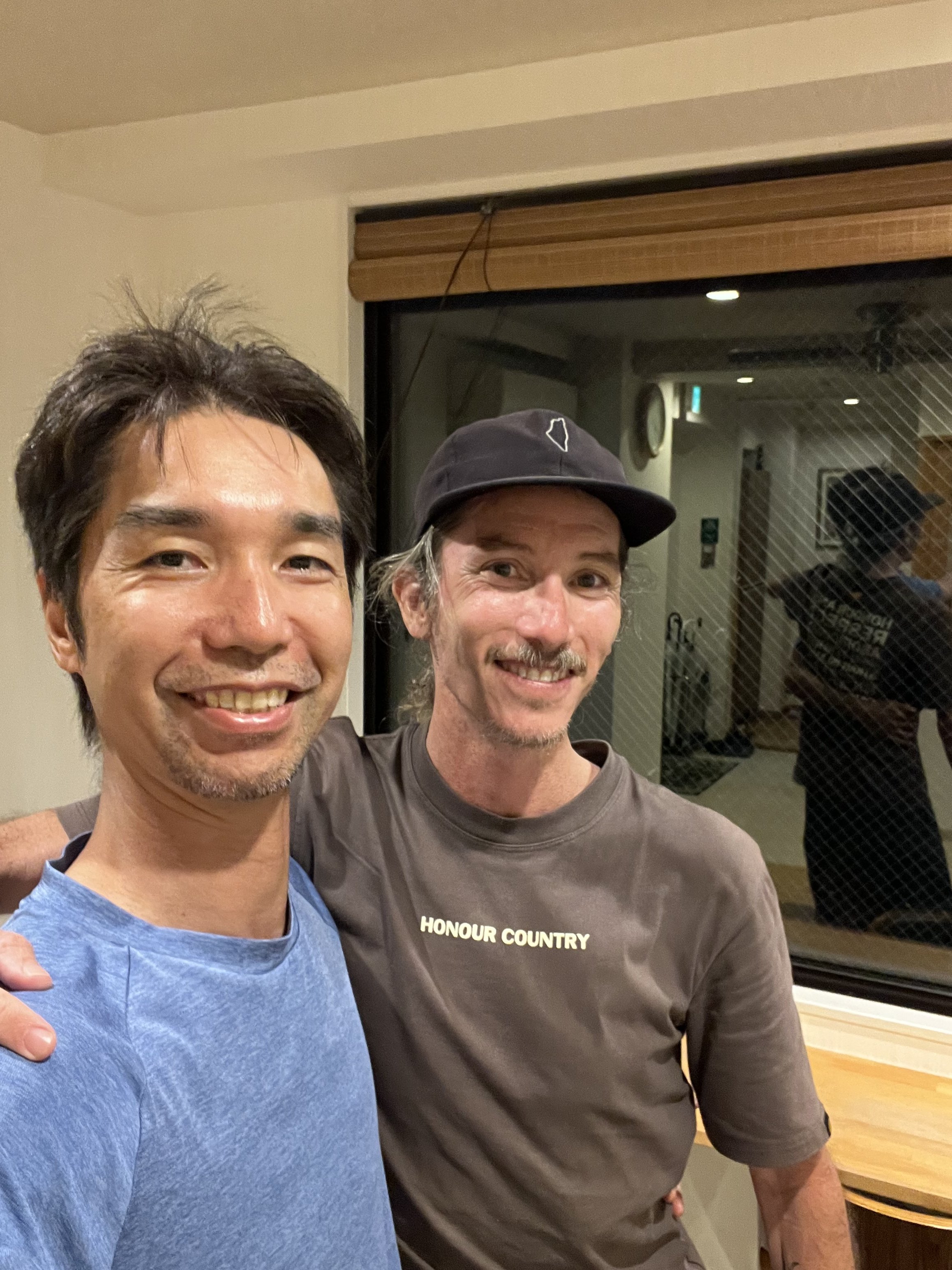
Ace and Doug at Guesthouse Wind Villa Kyoto
For ten years I have dedicated the majority of my time to understanding race, power and the ethics of storytelling. During that time I have moved from a position of naivety to one of being surprised and disappointed by the inactions of most people and organisations. But today, I am no longer surprised: Each action and inaction follows a familiar pattern where there is always a personal or organisational financial justification to remain silent.
When I compare this to my own experience where I have imperfectly spoken up and acted in ways aligned to my ethical storytelling ideology, I struggle to relate to the person I am today. At the same time I can definitely relate it back to my ignorant, naive self of yesteryear, when I believed governments and businesses, or at least community organisations and social enterprises cared enough to act in the interests of those most strategically oppressed.
That naivety has dissipated bit by bit over the years.
My new naivety has been that the workshops and consultancy I deliver to organisations could make a change and that speaking up for human rights would be valued but instead I have felt in most parts the opposite, leading to asking myself what is the cost of integrity?
We do not have to look far to understand why people are speaking up and acting in accordance with a moral compass and integrity. But it is the other side which has frustrated me most. Maybe because I no longer buy into the multiplicity of excuses of why someone “cannot” speak up. Personally, I cannot buy into this anymore because I genuinely believe we all must lead with integrity. This is further embodied within me when I claim to be an ethical storytelling practitioner. And with that I know I need to shift my energy elsewhere.
Whilst my focus has often been on the bystanders and the people with platforms who have only fairly recently spoken up, I continued to hear excuses about individual financial circumstances, making change from the inside and the need to be more “palatable.” And whilst I tried to understand these experiences, I couldn’t as I have chosen a different path which has not worked in my favour financially. Instead they have further encouraged me to doubledown on my ethical and moral integrity, notwithstanding the costs.
Speaking up comes at a personal cost but that is relative, yet real.
Doing the “work” has impacted my mental, physical and financial health significantly over the last few years, and without the support of a community of people who care for me, I don’t know where I’d be. There has been constant burnout. I have had to make the decision to live from my car for a period of time. I have had to rely on a welfare payment. These were some really dark times and I know I am never that far away from standing on that edge again.
Fortunately, I have certain privileges, one which allowed me to travel to Japan recently, the first time I have put my feet on the lands of my ancestors. It was also the first time I have travelled with my family for 30 years which was challenging yet powerful and fulfilling. In particular I had the time to reflect on where and who I am now and why I do what I do.
Mental Gymnastics by the Kamo River in Kyoto
This was the first time I slowed down to this level for many years where I feel I have filled my cup rather than just stopped it from going empty. This time it was different for reasons I cannot explain but it was the best I have felt for years. It allowed me to look at my reflection in the Kamo river, and review the meaning of the work we/I do: ethical storytelling and a term we have been using in our signatures since the beginning: upstanders.
These shouldn’t be buzzwords or co-opted to make us feel good about ourselves but rather they should come with accountability. These are aligned to how we turn up in the world, not dependent on bystander-tied funding which continually denies the human dignity of some whilst prioritising the denials from the people who use violence.
But hey, as my friend Jayne Christian says, pay attention to the behaviours, not the words or acknowledgements.
This is easier said than done and as my focus is more on the invisible and implicit forms of unethical storytelling by those celebrated for their “human rights” work, there is always the financially sustainable conundrum: “don’t bite the hand that feeds you”, although I would rephrase this and say “don’t bite the hand that may feed you with crumbs and conditions."
From a financial sustainability and business perspective this is not helpful at all, but I cannot continue to play the mental gymnastics where I try to come up with more excuses and justifications that forgo my integrity in exchange for who knows: it’s a slippery slope!
I know I have people looking out for me and who try to help me with the mental gymnastics, knowing the financial and mental cost ten years of doing this work has done to me. But I know I cannot shift in this way and therefore I have decided that I want to focus on the individuals, collectives and businesses who put integrity, ethics and human rights first, no matter the cost.
These are people where there has been a personal cost but they have found a way forward. These are the people who we show a moral clarity and may need our support. These are the people who are the leaders, often without the titles, awards or prestige. These are the people who in their own small big ways, have shown us the path to being an upstander. These are the people showing the way what being ethical and acting with integrity looks like. These are the people I admire and respect and fortunately for me continually enter into my orbit.
The Upstander Who Gave Me Some Hope
After a few weeks travelling with family and my dear friend and Our Race co-founder Dung- the person who introduced me to the term “upstander” over ten years ago- I travelled back to Kyoto and stayed at the Guesthouse Wind Villa Kyoto, a place that captured my attention. Ace, the owner of the guesthouse, set up a house policy asking guests to declare they have never committed war crimes. As you could imagine this blew up with the israeli ambassador accusing the guest house of discrimination leading to an independent investigation by the Kyoto government. Thankfully, he was cleared for his human rights stance which aims to prioritise the safety of staff and guests.
However, the story doesn’t stop there as zionist aligned accommodation actors airbnb and booking.com suspended his account. This has led to Ace finding alternatives in an industry dominated by zionist companies, relying on direct bookings and smaller booking sites like trip.com. His first actions have led to him doing better by asking the right questions, knowing more and boycotting. He shows us each positive action will take us closer to the next one and the next one and so forth.
After speaking with Ace about this a bit further, I witnessed this occurring again where an israeli tourist decided not to sign the pledge and cancel her booking, with Ace providing her with a refund. Because of the sensitivity of the situation, the power of israel, and Japan’s movement further to the right including lifting a ban on lethal weapons exports in major shift of pacifist policy, I acknowledge this imperfect action within an imperfect situation demonstrates how difficult it is to to do exactly what we would like. For example, an israeli who has served in the IOF could sign the pledge when they have committed war crimes. However, the more people who stand up like this, the easier it will get for all of us to do better.
In contrast to Ace’s stance, I experienced the polar opposite a few days later in Kyoto where I booked a vegan ramen cooking class. On this occasion I arrived at the meeting spot and met the host who told me I would be doing this class with two israelis. Rather than calling her out, I wanted to call her in and give her the opportunity to do better. I explained that it would not be safe attending this class and that as a vegan business they should act accordingly to the basic principles of veganism which must at a minimum be tied to human lives.
But rather than this vegan business taking a human rights stance they decided to take the side of the people committing a genocide. And when I shared with them my concerns in a follow up email where I referenced what Ace was doing, they did not respond.
This further highlights where I want to focus my energy: that is calling in those who seek to know more and say and act “no more”, and do better. That is what a real upstander does: they act with integrity no matter the cost.
Calling In As An Act of Solidarity
There are many out there acting in ways like Ace. The upstanders hidden away who act with integrity when nobody is watching. Who should we call in and shine the light on?
For those thinking of visiting Kyoto and want a #noroomforgenocide consider booking your time at Guesthouse Wind Villa Kyoto and sit down and have a cup of tea or coffee with Ace. It will be one of the highlights of your travels.